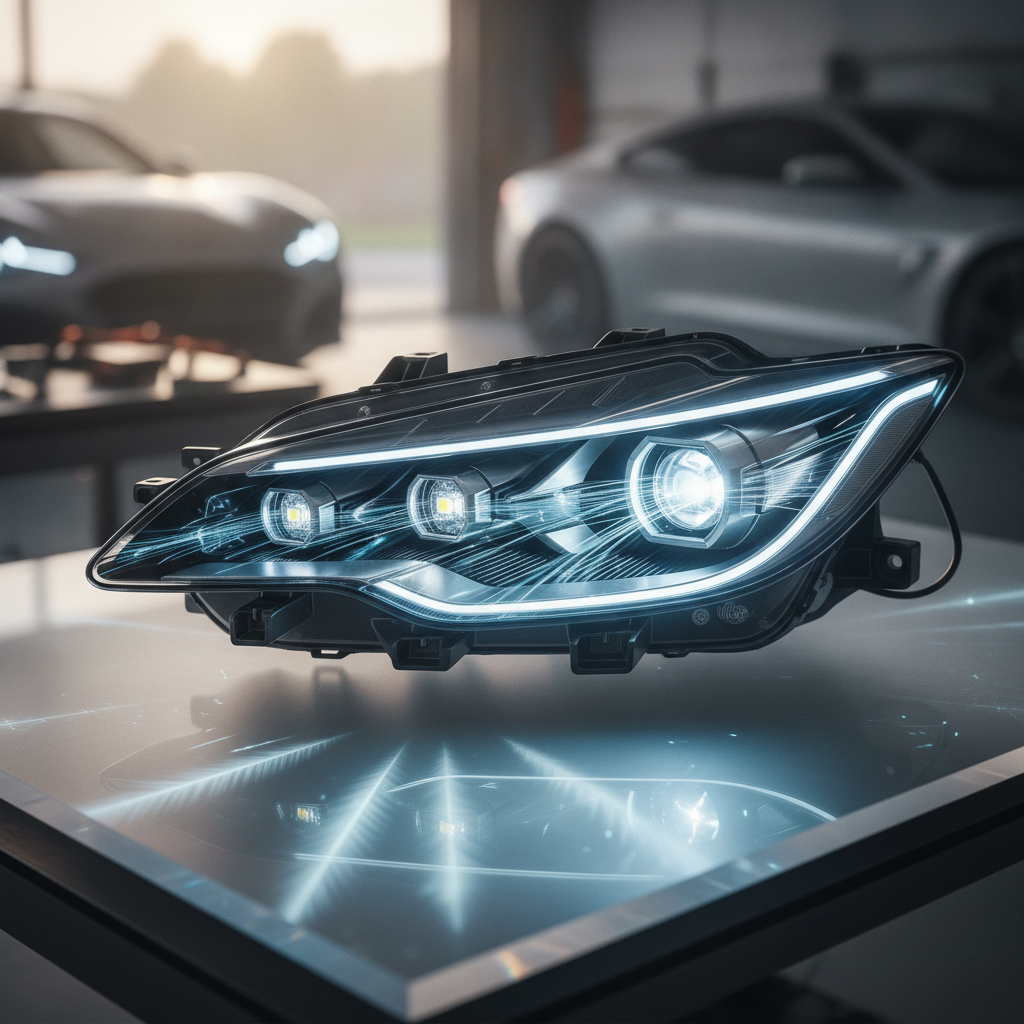
Illuminating the Road: More Than Just a Bulb
When you twist that knob or flick that stalk in your car, you expect light. It’s a fundamental part of driving, especially after dusk or in challenging weather. But have you ever paused to think about the incredible engineering and surprising science packed into those simple-looking fixtures at the front of your vehicle? Your car's headlights are far more than just bulbs; they're sophisticated systems designed to cut through darkness, enhance safety, and adapt to your driving environment.
From the earliest days of automotive travel, when acetylene lamps flickered to life, to today's dazzling LED arrays, the evolution of headlights has been a fascinating journey of scientific innovation. Let's delve into the fascinating mechanics that illuminate your path.
The Evolution of Light: From Filaments to Fields
Today, several distinct technologies power our car's forward vision, each with its own scientific principles:
- Halogen Headlights: The Reliable Standard
These are perhaps the most common headlights, and their science is quite elegant. A halogen bulb contains a tungsten filament, much like an old incandescent light bulb, but encased in a quartz capsule filled with halogen gas (like iodine or bromine). When electricity heats the filament, it glows brightly. The halogen gas helps prevent the tungsten from evaporating and depositing on the bulb's interior, allowing the filament to run hotter, producing more light and extending the bulb's life compared to standard incandescents. - Xenon (HID) Headlights: The Intense Glow
High-Intensity Discharge (HID) lights, often referred to as Xenon lights, operate on a fundamentally different principle. Instead of a filament, they create light by passing an electrical current through a capsule filled with Xenon gas and other metal salts. This creates an arc of light that is significantly brighter and often whiter or bluer than halogen lights, using less energy in the process. They require a ballast to provide the high voltage needed to ignite the arc. - LED Headlights: The Modern Revolution
Light Emitting Diodes (LEDs) are the cutting edge of automotive lighting. Unlike filaments or gas discharges, LEDs are solid-state devices. They produce light when electrons move through a semiconductor material. The specific color of the light depends on the material used. LEDs are incredibly energy-efficient, long-lasting, and compact, allowing for innovative headlight designs, including adaptive systems. - Adaptive & Matrix Headlights: The Intelligent Future
Beyond the light source itself, modern headlights often incorporate advanced optics and computer control. Adaptive headlights can swivel to illuminate around corners as you steer, while sophisticated matrix LED systems can individually control hundreds of tiny LED segments. This allows them to create dynamic beam patterns, dimming specific areas to avoid blinding oncoming drivers while keeping the rest of the road fully illuminated. It's a blend of precise engineering and complex software working in harmony.
Keeping Your Vision Clear: Headlight Maintenance Matters
Understanding the science behind your headlights highlights just how crucial they are for safety. Their performance directly impacts your reaction time and overall visibility on the road. Here are a few practical insights:
- Cloudy Lenses: Over time, UV exposure and environmental factors can cause your headlight lenses to become cloudy or yellowed. This isn't just cosmetic; it significantly reduces light output, sometimes by up to 80%! Headlight restoration services can clean and resurface these lenses, restoring clarity and brightness.
- Dimming or Flickering: If your headlights seem dimmer than usual, flicker, or one goes out, it could be a simple bulb issue, but it can also indicate more complex electrical problems within your vehicle's wiring or charging system.
- Proper Alignment: Even the brightest headlights are ineffective if they're not aimed correctly. Misaligned headlights can blind oncoming drivers or fail to illuminate the road effectively, creating dangerous blind spots.
From cloudy, yellowed lenses diminishing your light output to complex electrical issues affecting your headlight's performance, maintaining these crucial components is vital. Services like headlight restoration (often part of body and detailing work) can make a significant difference in visibility. If you notice dimming, flickering, or complete failure, it's often a sign of a deeper electrical or mechanical issue that requires professional diagnosis. Our team at Trans Service Group in Hollywood, Florida, understands the intricate systems behind your car's illumination and is ready to ensure your headlights are always performing at their best, contributing to safer travels across the Miami area.
Drive Safely, See Clearly
Your car's headlights are a marvel of automotive science, constantly evolving to make our roads safer. By appreciating the technology and staying on top of their maintenance, you ensure not only your own safety but that of everyone sharing the road. So next time you switch on your lights, remember the surprising science illuminating your drive!