The Unsung Hero of Your Dashboard
Every time you slide into the driver's seat, one of the first things you probably glance at (after buckling up, of course!) is the speedometer. It’s a seemingly simple dial or digital display, silently keeping tabs on your velocity. We take it for granted, but this essential instrument has a surprisingly rich and intriguing history, evolving from a crude concept to the sophisticated, often digital, device we rely on today.
Before the Needle: Measuring Speed in the Early Days
Imagine driving a car in the early 1900s without a speedometer. How would you know how fast you were going? Early drivers often relied on instinct, timing themselves between landmarks, or simply judging by the roar of the engine and the wind in their hair. This wasn't exactly precise or safe, especially as vehicles became capable of higher speeds. The need for a reliable, continuous speed measurement became critically apparent, not just for drivers' awareness but also for enforcing nascent speed limits.
The Birth of the Modern Speedometer
The concept of measuring vehicle speed mechanically dates back centuries, but the modern automotive speedometer as we know it largely began with German engineer Otto Schulze. In 1902, Schulze patented an eddy current speedometer, a groundbreaking design that forms the basis of many mechanical speedometers even today. This clever device utilized a rotating magnet, driven by the car's transmission, to create a magnetic field. This field induced eddy currents in a non-magnetic cup, causing it to drag and rotate against a spring. The resistance from the spring then moved a needle across a calibrated dial, accurately indicating speed.
Initially a luxury, as cars grew faster and safety concerns mounted, governments began mandating their inclusion. Connecticut, notably, was among the first states to require speedometers for cars capable of exceeding 15 mph by 1901.
From Mechanical Marvel to Digital Precision
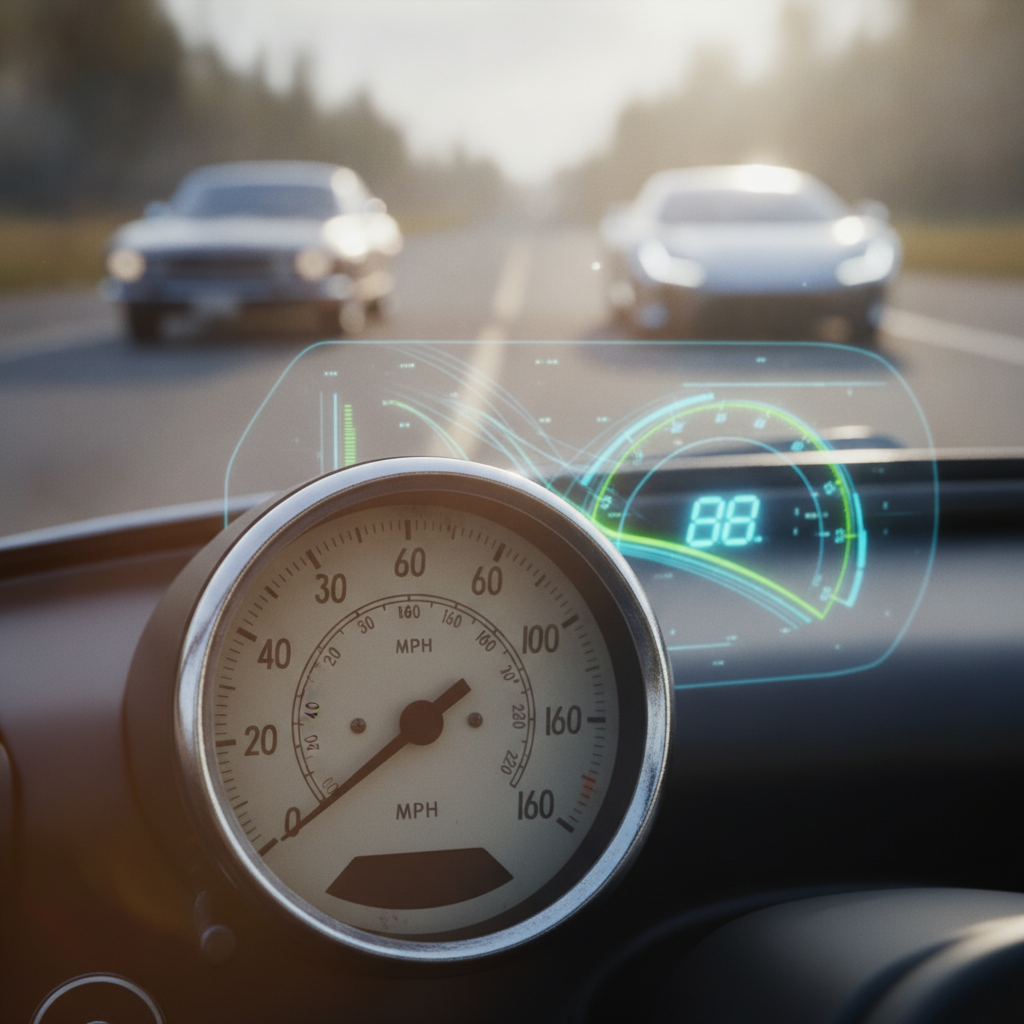
Over the decades, the speedometer has continued its evolution. The early mechanical versions, with their intricate gears and cables, eventually gave way to electronic designs. These modern speedometers often use sensors (like Hall effect or variable reluctance sensors) placed in the transmission or on the wheels to count rotations, converting these electrical signals into a digital speed reading. The rise of GPS technology has added another layer of precision, with many modern vehicles integrating satellite data to provide even more accurate speed information, sometimes even displaying it on a head-up display.
Why Your Speedometer's Accuracy Still Matters
Despite its long journey, the core purpose of the speedometer remains unchanged: to provide you with accurate speed information. This isn't just about avoiding a speeding ticket; it's crucial for:
- Safety: Maintaining appropriate speeds for road conditions and traffic.
- Fuel Efficiency: Driving at optimal speeds can impact your vehicle's fuel consumption.
- Vehicle Health: Understanding how your car performs at different speeds.
Several factors can affect your speedometer's accuracy. The most common is a change in tire size; installing tires with a different diameter than your vehicle's original equipment can throw off your speedometer readings significantly. Sensor malfunctions, worn cables (in older mechanical systems), or even dashboard electrical issues can also lead to inaccuracies.
If you ever suspect your speedometer isn't giving you the right numbers, or if you've made changes like upgrading your tires, it's wise to have it checked. Ensuring all your vehicle's systems are functioning optimally, from engine diagnostics to precise instrument readings, is key to safe and enjoyable driving. At Trans Service Group in Hollywood, Florida, our skilled technicians are equipped to diagnose and repair mechanical issues, electrical problems, and ensure all your vehicle’s components are calibrated correctly for reliable performance across the Miami area.
A Legacy of Innovation
The humble speedometer has come a long way from its rudimentary beginnings. It stands as a testament to ongoing automotive innovation, constantly evolving to meet the demands of faster, safer, and more technologically advanced vehicles. So, the next time you check your speed, take a moment to appreciate the fascinating history behind that vital little gauge!